



What is our long-term view on the AI bubble, and how does this filter into our broader economic view?
There’s a lot of concern as to whether AI is in a bubble. We don’t classify it that way. We think we’re very much in a boom. As we look at the AI picture, we think the technology is real. We think valuations, while they’re high, are not anywhere near a bubble level. We are watching circular financing, we are watching to make sure companies aren’t overinvesting, but what we see is something very rational. Big, healthy companies that are investing in AI are doing fine from a market perspective. With companies that aren’t as strong, the market’s being a little bit more discerning. So, we see rational – and not irrational – exuberance around AI.
What we’re seeing so far this year, though, is that the trade is changing. It was all about Magnificent Seven1 before. That has shifted now, and the AI trade is more focused on shortages in areas like memory and semi-cap equipment. It’s also shifting into the old economy, where you’re actually engaging in the build-out of all the infrastructure and the data centres, which is a big theme this year. Outside of those positive impacts, we’re seeing companies start to get disrupted, or at least their stocks, as AI is challenging certain business models. That’s really been a feature of what we’ve seen in software so far this year.
From our perspective, we think that AI really is the driver of the secular bull market that’s been in place since 2013. We think we’re middle-aged, at worst, in that secular bull market. And while the nature of the names that are outperforming around AI is changing, we think the theme will continue for some time.
Big, healthy companies that are investing in AI are doing fine from a market perspective. With companies that aren't as strong, the market's being a little bit more discerning. So, we see rational – and not irrational – exuberance around AI.
Have any of your 'surprise' predictions for 2026 come true already, and what might still be to come?
We have a constructive view on the markets and the economy for 2026. We have GDP growing somewhere around 3%, we have inflation coming down towards that 2.5% range. We have the S&P 500 getting up to 7,800. That said, we have identified some positive and negative surprises that we might expect to see this year. On the negative side, we’ve seen quite a few – we’ve seen some disruption around AI in certain parts of the market, we’ve seen some policy proposals that have caused volatility inside of the markets.
But on the positive side, what are we seeing? We are seeing GDP growth come in stronger than the consensus’s expectation, and that’s similar to our own views. We are seeing earnings continue to grow a little bit faster than what the market is expecting and earnings estimates continuing to rise. What we haven’t seen yet, and we do expect to see, is that AI capital expenditure (CapEx) is going to lead to a stronger-than-expected labour market. We’re early in the year, so we still haven’t seen that play out. But as we start to get more shovels in the ground, we expect we’re going to see a little bit of labour market strength, which is counter to the consensus’s expectation. Outside of some, let’s call it, extreme volatility in the first couple of weeks of the year, we still see an economy and a market that is on pace to deliver what we expect, which is stronger-than-expected growth and higher stock prices.
What is your view on the ‘broadening out trade’?
We are definitely seeing a broadening out in the equity markets, and it’s really two different phenomena that are happening at the same time.
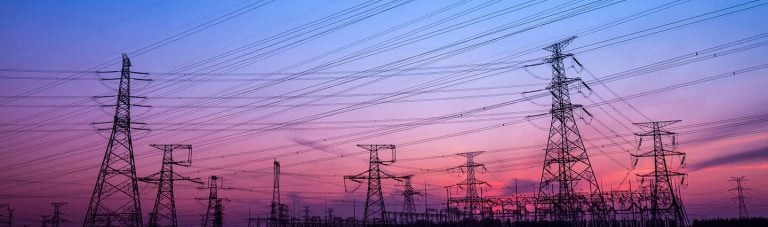
Within the AI trade, we’re seeing the market shift from AI being expressed predominantly through the Magnificent Seven to it now moving to areas of other bottlenecks in the AI story. We’re seeing that impact names in a positive way in semi-cap and in memory. We’re also seeing a broadening out from the technology element of AI to the old economy infrastructure build-out related around AI, and you see that in certain commodity prices. You see it in power generation. You see it in certain energy companies. It’s that old economy part of the market that is responding to us building these data centres and the infrastructure that’s designed to support AI.
Secondly, what’s happening – very interestingly – in the market is that you’re seeing it move in a cyclical direction. Cyclical value companies and old economy names are starting to respond and participate more. You’re also seeing, given some of the volatility that we’ve had so far this year, defensive dividend-paying names participating and leading. So, the broadening out is something that market participants have been waiting for a couple of years. We’re seeing it play out, certainly in those large-cap value names on the cyclical and defensive side. Then, just as interestingly and at the same time, small caps are really starting to outperform really for the first time in several years.
So, the broadening out is real, and we think it’s happening right now. We think that that’s a trend that continues to have legs.
BD017237